
Update ♦ FAQs ♦ Investigation ♦ Recall/Alerts ♦ Resources
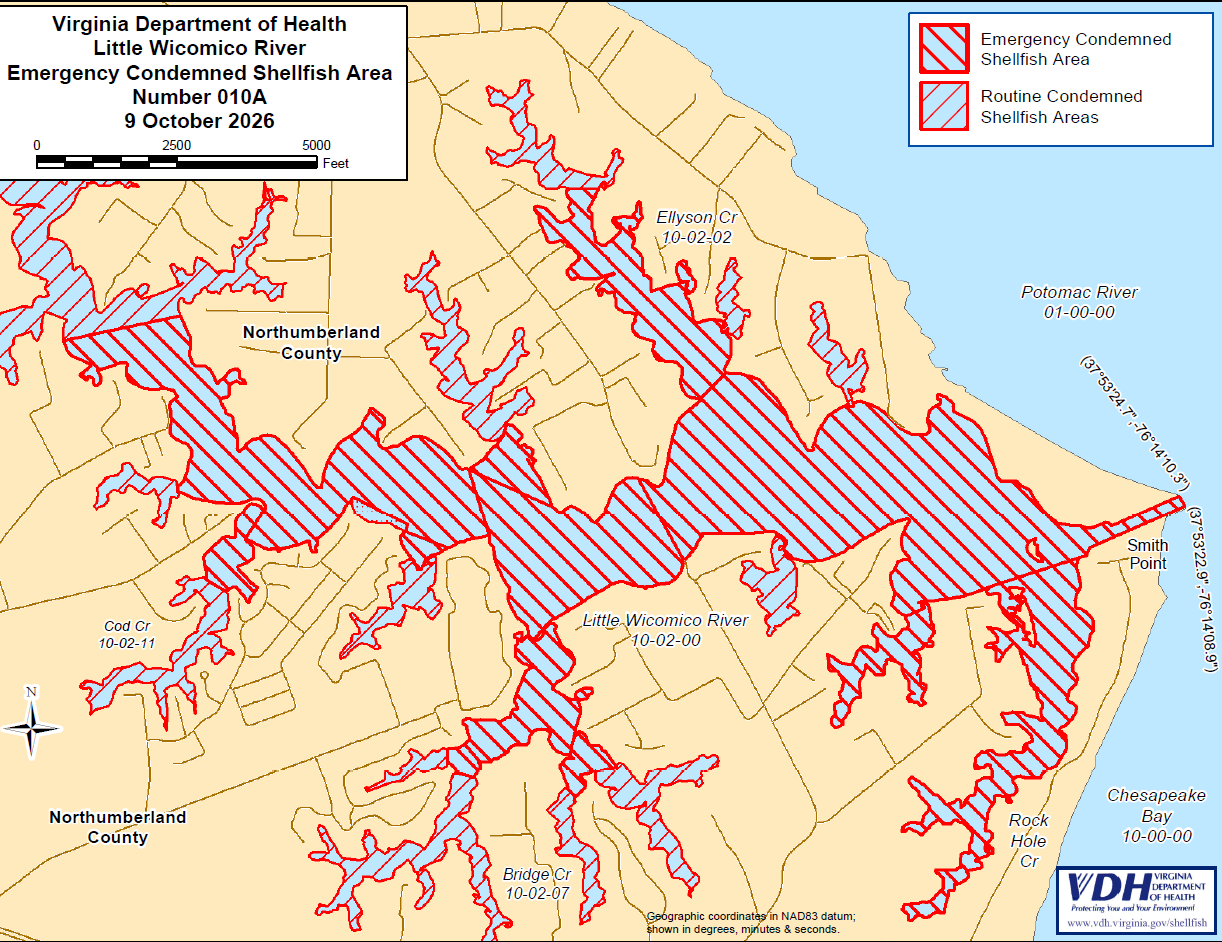
Effective Friday October 9, the Virginia Department of Health (VDH) announced an emergency closure for one shellfish growing area out of an abundance of caution and in conformance with recommendations from the U.S. Food and Drug Administration (FDA). The waters in the Little Wicomico River in Northumberland County are closed to harvesting of oysters and clams due to a link to a Salmonella outbreak in Pennsylvania. The outbreak was declared by the Pennsylvania Department of Health in combination with the Pennsylvania Department of Agriculture.
In response to this single growing area closure, a recall notice was issued only for Little Wicomico Oyster Company products harvested from the now closed Little Wicomico and Little Wicomico River lower growing areas.
On Monday, October 19, the Centers for Disease Control and Prevention (CDC) issued a Food Safety Alert associated with a multistate outbreak of Salmonella Telelkebir infections. The FDA worked with states to conduct traceback to identify sources of oysters consumed by sick people. Oysters reported by ill people were harvested from multiple geographic locations, but oysters harvested from the Little Wicomico River by Little Wicomico Oyster Company were the only oysters in common to the seven ill people included in traceback.
The Virginia Department of Health (VDH) oversees more than 90 shellfish growing areas covering four major rivers and their tributaries, the Chesapeake Bay, and estuaries of the Atlantic Ocean. Shellfish products harvested from the other Virginia growing areas are not impacted by the emergency closure or recall.
በተደጋጋሚ የሚቀርቡ ጥያቄዎች
What was recalled?
DSSWH is supporting a recall of oysters harvested in the Little Wicomico River starting on September 18, 2026 through October 8, 2026, by Little Wicomico Oyster Company VA-1421-SP.
Details:
Shellfish Product: Shellstock oysters
Harvest Date: September 18, 2026, through and October 8, 2026
Harvest Location: Little Wicomico River, VA or Little Wicomico River Lower, VA
የተጎዱት ኦይስተሮች ወደ CO, CT, DC, FL, GA, IL, MD, MO, NC, NJ, NV, NY, PA, VA, እና TX ተሰራጭተዋል።
Are other oyster brands affected?
No, the recall is limited to oysters harvested from the Little Wicomico River between September 18, 2026, through and October 8, 2026 and distributed by Little Wicomico Oyster Company.
Shellfish products harvested from the other open Virginia growing areas and distributed by other Virginia shellfish dealers are not impacted by the emergency closure ወይም recall።
ምን ማድረግ ነው የሚገባኝ፧
- Do not eat, sell, or serve recalled oysters.
- Throw them away or return any recalled oysters.
- Wash items and surfaces that may have touched the recalled oysters using hot soapy water or a dishwasher.
What should businesses do?
- Do not sell or serve recalled oysters.
- Throw them away or return recalled oysters.
- Wash and sanitize items and surfaces that may have come in contact with recalled oysters.
How can I tell if my oysters are part of the recall?
- Review shellstock tags to verify the harvest area, harvest date, and other required identifying information.
- Check lot codes and product identification on shucked oyster containers and retain the information necessary for traceability.
- Confirm that the identified harvest areas were open and approved for harvest on the applicable harvest date.
- Contact Virginia shellfish dealers directly with questions about product origin, lot identification, documentation, or the source of any specific shipment.
Are Virginia oysters safe to eat?
VDH oversees more than 90 shellfish growing areas covering four major rivers and their tributaries, the Chesapeake Bay, and estuaries of the Atlantic Ocean. The Division of Shellfish Safety and Waterborne Hazards works to protect shellfish consumers through water quality monitoring, growing area assessment, education and regulatory programs.
Shellfish products harvested from the other open Virginia growing areas and distributed by other Virginia shellfish dealers are not impacted by the emergency closure or recall.
Raw or undercooked oysters carry a risk of foodborne illness.
What is Salmonella Telelkebir?
ሳልሞኔላ Telelkebir is a rare bacterial strain የሚለውን ነው። can cause salmonellosis, a gastrointestinal infection.
የሳልሞኔሎሲስ ምልክቶች ምንድ ናቸው?
Salmonellosis symptoms include:
- ተቅማጥ
- Fever, and
- Stomach cramps.
Symptoms usually start six hours to six days after swallowing the bacteria. Most people recover without treatment after four to seven days.
People more likely to experience severe illness include:
- Children younger than under,
- Adults 65 and older, and
- People with weakened immune systems.
When should I seek care?
Call a healthcare provider right away if you have any of these severe salmonellosis symptoms:
- Diarrhea and a fever higher than 102°F
- Diarrhea for more than 2 days that is not improving
- የደም ተቅማጥ
- So much vomiting that you cannot keep liquids down
- Signs of dehydration, such as:
- Not peeing much
- Dry mouth and throat
- Feeling dizzy when standing up
Is Salmonella normally found in oysters?
A study of FDA samples show that nationally 1.5% of oysters test positive for the presence of ሳልሞኔላ።
Has VDH taken previous enforcement action against LWOC?
VDH conducts inspections at the frequency required and issues shellfish dealer certifications in accordance with the National Shellfish Sanitation Program (NSSP). LWOC is currently a certified shellfish dealer. To our knowledge, VDH has not identified deficiencies through routine or follow-up inspections of the shellfish dealer facilities to date that establish a link between LWOC’s operations and the reported Salmonella illnesses.
Investigation Details
ዳራ
As of October 14, 53 cases have been reported in Salmonella Telelkebir investigation from 18 states. Illnesses began in late May 2026 and the most recent illness date is September 21.
Currently, CDC is focusing its investigation on a genomic subgroup of 27 cases from 12 states within the broader Salmonella Telelkebir investigation. Shellfish tag and traceback information is currently available for 7 of the 10 cases reporting raw oyster consumption.
- Two of the cases were single-source cases (VA)
- The remaining five cases were multi-source, with one potential source the same VA growing area as the single-source cases and other sources from VA, NJ, MA, GA/CAN, or VA/NJ/MA.
Based on data collected to date, consumption of raw oysters from a single Virginia harvest area is the likely source for illnesses in the genomic subcluster. Out of an abundance of caution, VDH issued an emergency shellfish closure and an oyster recall.
CDC continues to evaluate epidemiologic information from other Salmonella Telelkebir illness in the broader outbreak to identify whether other foods or exposures are linked to illness.
State and local health departments are working with their shellfish authorities and/or FDA to collect and share oyster tag information with the relevant shellfish authorities.
የVDH እርምጃዎች
- On Friday, October 9, VDH issued an emergency closure for shellfish harvesting in the Little Wicomico River. The closure was issued out of an abundance of caution and in conformance with recommendations from the FDA due to an epidemiological link to a Salmonella Telelkebir outbreak in Pennsylvania.
- On Friday, October 9, VDH worked with Little Wicomico Oyster Company to implement a voluntary recall of their products harvested within the closed growing area.
- On October 13, VDH Division of Shellfish Safety and Waterborne Hazards (DSSWH) collected 400 LWOC oysters from cages on the Little Wicomico River, processed the oysters, and submitted meat samples to the Department of General Services (DGS) Division of Consolidated Laboratory Services (DCLS) for Salmonella testing. Results are anticipated to be available on Tuesday, October 20.
- DSSWH will conduct additional growing-area sampling on or about October 21, subject to coordination and operational readiness.
- VDH is coordinating with FDA and CDC partners regarding the outbreak.
Reopening of the Growing Area
Reopening will require three rounds of product testing from the shellfish growing area. All tests must have negative results prior to reopening. A second round of sampling is planned for around October 21, and a third round the following week. The initial emergency closure period is expected to be 30 days under the applicable Code of Virginia authority, subject to regulatory requirements and reopening criteria.
እውቂያ
VDH Call Center
877-829-4682 (Option 6)
Monday–Friday (no holidays) 8 a.m. to 5 p.m.